

 Planning
Shopping in Santa Cruz de Tenerife: Streets, Markets & Malls
Where to shop in Santa Cruz de Tenerife — Calle del Castillo, Mercado de Nuestra Señora de África, El Corte Inglés, Meridiano and local Tenerife gifts.
Read guideA full self-drive loop around Tenerife using the TF-1, TF-82 and TF-5, with the best stops, realistic timing, road tips and a one-day or two-day plan.
There is no single officially named “Tenerife Ring Road”, but you can make a very practical self-drive loop around most of the island using the main TF-1 motorway in the south and east, the TF-82 connection through the west, and the TF-5 across the north. Add short detours and you can link the island’s resort coast, volcanic west, historic north and metropolitan east in one big circuit.
The basic loop is roughly 170–190 km depending on your start point and detours. Do not plan it as a race: allow at least a full day if you want to stop, eat, walk around towns and enjoy viewpoints. For a relaxed trip, split the route over two days.
New to driving on the island? Read our Driving in Tenerife guide first.
Suggested start
Costa Adeje or Los Cristianos, where many visitors stay and rental cars are easy to collect.
Recommended direction
Clockwise: south coast → west → north → Santa Cruz → south-east coast → back to the resorts.
Main road backbone
TF-1 in the south/east, TF-82 across the west/north-west connection, and TF-5 across the north. Some sightseeing stops use short local-road detours.
Pure driving time
Plan on at least around four hours of wheel time in good conditions; traffic, roadworks and sightseeing detours can add substantially more.
Best format
One long day for a highlights loop; two days if you want proper time in Garachico, Icod, Puerto de la Cruz, La Laguna and the south-east coast.
Not included
Teide, Anaga and Masca are separate mountain-road detours. Trying to add all three to the full island loop in one day makes the itinerary unrealistic.
Leave the southern resorts early and head west. Costa Adeje is a practical starting point, but the route works equally well from Los Cristianos or Playa de las Américas. The first worthwhile detour is Los Gigantes, where huge sea cliffs rise above the Atlantic and the marina makes an easy coffee or viewpoint stop.
From the west coast continue towards Santiago del Teide. This is where the landscape starts to feel less like the resort south and more like Tenerife’s volcanic interior. Stay on the main through-route rather than treating the Masca road as a shortcut.
Continue on the west-to-north connection towards Icod de los Vinos. This is the section where the full loop stops feeling like a motorway trip: gradients, bends and older roads slow the pace, so build in more time than the distance suggests.
Garachico is worth the coastal detour for its historic centre, harbourfront and volcanic coastline. Icod de los Vinos is the next natural stop, with a compact old town and easy access back to the northern road network.
The northern part of the loop becomes easier again as you move towards Puerto de la Cruz and the TF-5 corridor. Puerto de la Cruz makes a strong lunch stop if you want sea views, a walk through town or more time away from the car.
Continue east on the TF-5 towards San Cristóbal de La Laguna. Traffic can become much heavier as you approach the metropolitan area, particularly around commuter periods, so do not assume the last northern section will always run at motorway speed.
La Laguna is the best historic-city stop on this part of the circuit. Park rather than trying to drive every old-centre street, then explore the UNESCO-listed core on foot before continuing to Santa Cruz.
From La Laguna, descend into Santa Cruz de Tenerife. If this is your first visit, you can stop for the waterfront, Mercado de Nuestra Señora de África or a short city walk. If you are already behind schedule, stay on the through-route and keep moving south.
Santa Cruz is also the strongest shopping stop on the loop. You can combine the traditional Mercado de Nuestra Señora de África with Calle del Castillo in the centre, then larger retail stops such as El Corte Inglés and Centro Comercial Meridiano if shopping is part of your day. See our full Shopping in Santa Cruz de Tenerife guide for streets, markets and malls.
South of the capital the TF-1 becomes the easy backbone of the route again. Candelaria is a convenient cultural stop with its seafront basilica area and a very different atmosphere from the resort towns farther south.
Continue down the east coast on TF-1. If you still have daylight, leave the motorway for El Médano, a relaxed beach town beside Montaña Roja. It is a good final stop before the short run back towards Los Cristianos and Costa Adeje.
By the time you return to the southern resorts you will have crossed Tenerife’s dry south, volcanic west, greener north and busier metropolitan east — without needing to cross Teide or commit to the narrow Masca mountain road.
For one day, keep the stops short: Los Gigantes viewpoint, Garachico, Icod, Puerto de la Cruz or La Laguna, Candelaria and El Médano. You will see a lot, but you will spend a substantial part of the day driving.
For two days, split in the north-west. Day 1 can run from the south through Los Gigantes, Santiago del Teide, Garachico and Icod, with an overnight around Puerto de la Cruz. Day 2 can cover Puerto de la Cruz, La Laguna, Santa Cruz, Candelaria and El Médano before returning south.
A two-day version is also the better choice if you want museums, long lunches, swimming stops or proper walks rather than quick photo stops.
Start early
Leave the south in the morning so the west and north-west sections are comfortably completed in daylight.
Traffic
Expect the most unpredictable delays around TF-5, La Laguna and Santa Cruz. Airport and commuter traffic can also affect TF-1.
Fuel
Start with enough fuel for the loop. There are many filling stations on the main corridors, but do not wait until a remote west-coast section to refuel.
Parking
Use signed public parking in historic towns and walk the final few minutes. Avoid improvised roadside parking on bends or narrow shoulders.
Navigation
Use live navigation, but follow road signs and closures over the app. A shorter-looking mountain road can be slower and more stressful than the main route.
Weather
Conditions can differ dramatically between south, north and higher western sections on the same day. Carry water and a light layer even when the resort forecast is hot.
Roadworks, incidents and temporary restrictions can change the best route. Check live information before leaving and again if navigation suddenly proposes a mountain-road diversion.
Cabildo de Tenerife road-information centre and live traffic cameras.
DGT live traffic incidents and road-status information.
Cabildo de Tenerife roads, transport and infrastructure information.

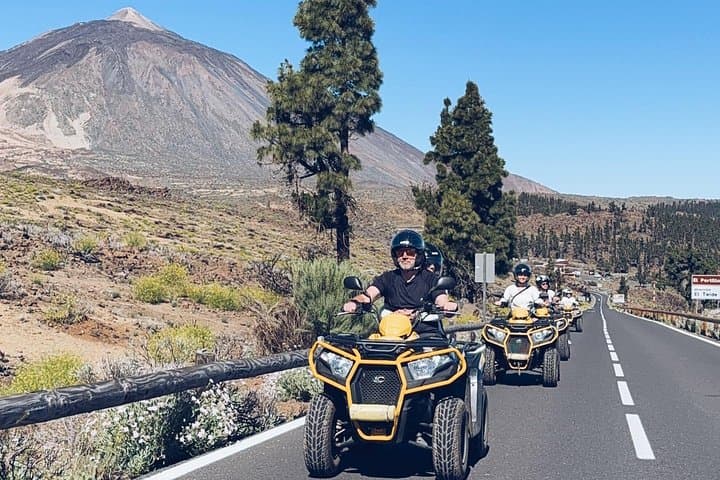
From €85
View →via Viator


From €886
View →via Viator
Booking and payment take place securely with our partner. GoToTene may earn a commission at no extra cost to you.
 Whale WatchingTickets
Sheer sea cliffs rising up to around 600 metres straight out of the Atlantic on Tenerife's west coast.
 Museums & Culture
A beautifully preserved former Atlantic trading port reshaped by the 1706 volcanic eruption, with historic streets, old harbour remains and lava-formed sea pools.
 Towns & Villages
A historic north-west Tenerife town of cobbled streets, plazas and wine heritage, best known as the home of the Drago Milenario.
 Family Attractions
A historic Atlantic port that evolved from Tenerife’s wine-trading gateway into one of the Canary Islands’ earliest major tourism centres.
 Museums & Culture
Tenerife’s UNESCO-listed former capital: a walkable historic city whose 15th-century street plan became an influential model for later Spanish colonial towns in the Americas.
 Towns & Villages
A major Canarian pilgrimage town where Guanche history, the devotion to the Virgin of Candelaria and centuries of maritime and cultural exchange meet on Tenerife’s east coast.
Towns & VillagesA major Canarian pilgrimage town where Guanche history, the devotion to the Virgin of Candelaria and centuries of maritime and cultural exchange meet on Tenerife’s east coast.
 BeachesTickets
A southwest Tenerife resort area with beaches, coastal promenades and Puerto Colón marina, distinct from the inland historic town of Adeje.
 Beaches
A laid-back southern beach town beside Montaña Roja, and one of Europe's best-known windsurfing and kitesurfing spots.
Museums & CultureA beautifully preserved former Atlantic trading port reshaped by the 1706 volcanic eruption, with historic streets, old harbour remains and lava-formed sea pools.
Towns & VillagesA historic north-west Tenerife town of cobbled streets, plazas and wine heritage, best known as the home of the Drago Milenario.
Museums & CultureTenerife’s UNESCO-listed former capital: a walkable historic city whose 15th-century street plan became an influential model for later Spanish colonial towns in the Americas.
Whale WatchingTicketsSheer sea cliffs rising up to around 600 metres straight out of the Atlantic on Tenerife's west coast.
Family AttractionsA historic Atlantic port that evolved from Tenerife’s wine-trading gateway into one of the Canary Islands’ earliest major tourism centres.
 Towns & Villages
Tenerife’s Atlantic-facing capital: a port city shaped by Guanche Anaga, the Castilian conquest, maritime trade, fortifications, civic life and modern Canarian culture.
.jpg%3Fwidth%3D1600&w=3840&q=75) Towns & Villages
Towns & VillagesSantiago del Teide is a town and a municipality in the western part of the island Tenerife, Canary Islands, and part of the province of Santa Cruz de Tenerife.
 Route
RouteAncient laurel forest, knife-edge ridges and remote hamlets in the island's wild, misty north-east.
RouteGreen, traditional and historic — banana country, colonial towns and the ancient dragon tree of the verdant north.
 Route
RouteGolden beaches, lively resorts and the windsurfing bay of El Médano along the sunny southern coast.
PlanningWhere to shop in Santa Cruz de Tenerife — Calle del Castillo, Mercado de Nuestra Señora de África, El Corte Inglés, Meridiano and local Tenerife gifts.
Read guide Planning
Plan a day in Tenerife’s capital with historic Santa Cruz, MUNA, the market, TEA, Auditorio, Palmetum, Las Teresitas and the stories behind the city.
Read guide Planning
A practical guide to driving in Tenerife — rental cars, road rules, TF-1 and TF-5, mountain roads, parking, emergencies and scenic-route planning.
Read guidePlanningA practical guide to Tenerife’s most rewarding scenic drives and viewpoints — from Teide’s volcanic highlands to Anaga’s cloud forests and the mountain roads of Teno and Masca.
Read guidePlanningA practical comparison of north and south Tenerife — climate, beaches, towns, scenery, nightlife and which side works best for different kinds of trips.
Read guidePlanningA practical first-time guide to Tenerife — when to go, where to stay, how to get around, what not to miss and how to balance beaches, mountains, towns and experiences.
Read guide