

Santa Cruz & La Laguna
Monastery Santa Catalina La Laguna
A 1611 Dominican convent on Plaza del Adelantado, known for Mudéjar-influenced architecture, Baroque art and the story of Sor María de Jesús.
- Dominican convent founded in 1611
- Mudéjar-influenced carved woodwork and traditional roof forms
- Baroque altarpieces and the tomb of Sor María de Jesús
History & background
The Convent of Santa Catalina de Siena was founded for Dominican nuns in 1611 on the former house of the Adelantados. Its position on Plaza del Adelantado places it at the centre of La Laguna’s historic civic and religious landscape.
The complex shows strong Mudéjar influence in elements such as carved wooden viewing galleries and its tiled roof. The church is a single-nave space with upper and lower choirs and preserves an important collection of religious art, including carved Baroque altarpieces and devotional paintings.
The convent is especially associated with Sor María de Jesús de León Delgado, often called La Siervita. Her tomb is preserved here, and the convent has a long-established annual devotional tradition connected with the anniversary of her death in February.
Continue exploring nearby heritage and attractions with Palacio de Nava and Adelantado Square. Check the visitor information for each before you go.
Visitor information
Daytime while exploring Plaza del Adelantado and the UNESCO historic centre
20–45 minutes
The convent remains a religious community, so visitor access is more limited than at a conventional museum. The exterior and Plaza del Adelantado setting are easy to include on a historic-centre walk; check current access before planning around the interior.
Frequently asked questions
- The Dominican convent was founded in 1611.
Location
Explore nearby
Places close to Monastery Santa Catalina La Laguna, sorted by distance.

Palacio de Nava
Santa Cruz & La Laguna
Visit Nava Palace by Plaza del Adelantado in La Laguna, a historic mansion with mixed architectural styles.
Santa Cruz & La Laguna
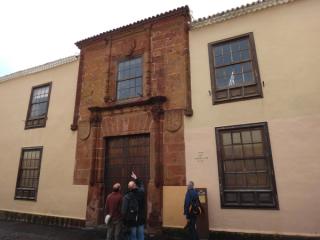
A compact but important civic building beside Plaza del Adelantado, preserving one of La Laguna’s most distinctive early stone façades.
Santa Cruz & La Laguna
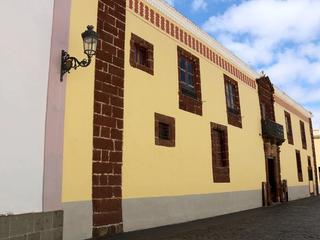
A major historic house in La Laguna associated with the island’s governing elite and distinguished by its traditional Canarian courtyard architecture.

Adelantado Square
Santa Cruz & La Laguna
La Laguna’s historic civic square, surrounded by important religious and residential buildings and centred on a 19th-century marble fountain.

Mesa House (Casa Mesa)
Santa Cruz & La Laguna
An 18th-century noble house in La Laguna, later remodelled and associated with the Mesa family and the city’s long tradition of education.
Santa Cruz & La Laguna
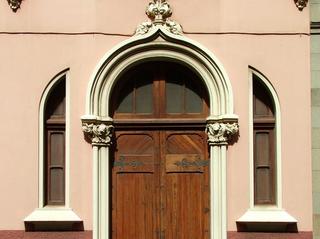
A former girls’ school on Calle Consistorio, recognisable by its ornate Neo-Gothic façade redesigned by Mariano Estanga in 1912.
Rodríguez de Azero Mansion
Santa Cruz & La Laguna
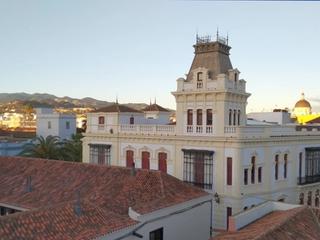
A refined historic residence in La Laguna that reflects the city’s transition into a more modern urban centre during the late 19th and early 20th centuries.

Hermitage of San Miguel
Santa Cruz & La Laguna
Explore Saint Michael's Hermitage on Plaza del Adelantado in La Laguna's historic centre.

Casa Anchieta
Santa Cruz & La Laguna
A historic house beside Plaza del Adelantado associated with José de Anchieta, the Tenerife-born missionary and co-founder of São Paulo.
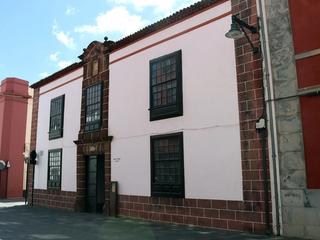
Riquel House (Casa Riquel)
Santa Cruz & La Laguna
An 18th-century La Laguna residence distinguished by red stone details and a heraldic marble coat of arms.
Guaydil
San Cristóbal de La Laguna · Santa Cruz & La Laguna
A contemporary fusion restaurant on Calle Deán Palahí in La Laguna’s historic centre.
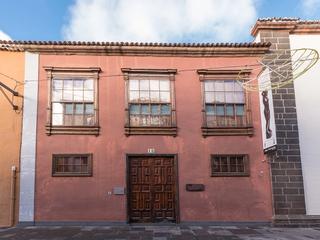
Cristino de Vera Foundation
Santa Cruz & La Laguna
A small art foundation in La Laguna devoted to the work of Canarian painter Cristino de Vera, set inside a restored historic building.
Related places
 Museums & Culture
Palacio de Nava
Visit Nava Palace by Plaza del Adelantado in La Laguna, a historic mansion with mixed architectural styles.
 Museums & Culture
Adelantado Square
La Laguna’s historic civic square, surrounded by important religious and residential buildings and centred on a 19th-century marble fountain.