

Whale Watching in Tenerife
A practical guide to whale and dolphin watching in Tenerife — where boats depart, what species are commonly seen, how to choose a responsible operator and what to expect at sea.
Why Tenerife is one of Europe’s strongest whale-watching destinations
The waters off Tenerife’s south-west coast support resident populations of short-finned pilot whales and bottlenose dolphins, which is why whale- and dolphin-watching trips operate throughout the year. Sightings are never guaranteed in nature, but this resident population makes Tenerife very different from destinations that depend mainly on seasonal migrations.
Where trips usually depart
Most visitor trips leave from the south-west coast, particularly Puerto Colón in Costa Adeje, Los Cristianos and the Los Gigantes area. The best departure point is often the one that fits your base and the style of boat you prefer rather than simply the nearest harbour.
Small boat or larger excursion?
Smaller boats can feel more intimate and may carry specialist guides, while larger catamarans offer more space and may include swimming stops or food. There is no single best format: prioritise responsible wildlife practices, realistic group size and the experience you actually want.
Choose a responsible operator
Look for authorised operators that follow Canary Islands cetacean-watching rules. The Blue Boat, or Barco Azul, identification is an important sign that a vessel is authorised for whale- and dolphin-watching activity. Responsible trips should avoid crowding animals or treating sightings as a performance.
Sea conditions and motion sickness
Even on a sunny day the Atlantic can have swell. If you are prone to motion sickness, choose your boat type carefully, eat lightly beforehand and follow medical advice on suitable prevention. Wind and sea state can also change the route or cause cancellations.
What to bring
Bring sun protection, a light layer for wind, secure footwear and a camera with a strap. On smaller boats, avoid carrying unnecessary loose items. If your trip includes swimming, check exactly what the operator provides before assuming towels, snorkel equipment or food are included.
Did you know?
The channel between Tenerife and La Gomera is particularly important for cetaceans because deep water lies close to the islands. This helps explain why resident pilot whales can be encountered relatively near the south-west coast instead of far offshore.
Best first-time choice
For a first trip, choose an authorised operator with clear wildlife guidelines, a duration that suits your group and a departure port close enough that you are not rushing. Treat sightings as wildlife encounters rather than guarantees, and the experience is far more rewarding.
Places featured in this guide
Costa Adeje
A modern resort area on Tenerife's sunny south-west coast with sheltered beaches and a marina.
Los Cristianos
A former fishing village turned lively resort town, and the main ferry port for the southern Canary Islands.
 Nature & ForestsTickets
Acantilados de Los Gigantes
Sheer sea cliffs rising up to around 600 metres straight out of the Atlantic on Tenerife's west coast.
On the map
Tours & experiences
Bookable tickets, tours and activities from our partners.

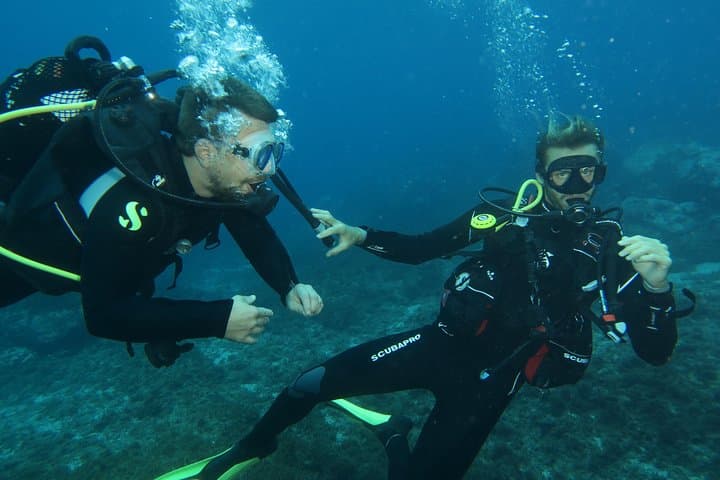
RECREATIONAL DIVE (certified divers only) : Explore Canarian Sealife
From €95
View →via Viator

Booking and payment take place securely with our partner. GoToTene may earn a commission at no extra cost to you.