

Santa Cruz & La Laguna
Church of Saint Francis of Assisi
A Baroque church in Santa Cruz, originally part of a Franciscan convent and known for its religious artworks and devotion to the Señor de las Tribulaciones.
History & background
The Iglesia de San Francisco de Asís (Church of St. Francis of Assisi) is a Catholic church located in the city of Santa Cruz de Tenerife (Canary Islands, Spain).
This church was originally a Franciscan convent and is now the second most important church of the city, after the Church of the Conception. The present church was completed in 1680 and notable for the large number of works of art he owns. The church has three naves and is one of the best examples of Baroque architecture in the Canary Islands.
Although the church is most famous because it is home to the miraculous image of the Señor de las Tribulaciones, a small picture that represents Jesus Christ, which is famous because after a cholera epidemic and morbidity in 1893, we made a procession with this image through the streets of the city and the epidemic stopped miraculously. For this reason the size is invoked as protector of the city and taking the title of Señor de Santa Cruz.
Continue exploring nearby heritage and attractions with Chapel of Venerable Orden Tercera and Santa Cruz Municipal Museum of Fine Arts. Check the visitor information for each before you go.
Location
Explore nearby
Places close to Church of Saint Francis of Assisi, sorted by distance.

Santa Cruz & La Laguna
An 18th-century Franciscan Third Order chapel beside San Francisco church, preserving rococo art and an important chapter of Santa Cruz civic history.

Santa Cruz & La Laguna
Santa Cruz’s municipal fine-arts museum, with Flemish, Spanish and Canarian works that trace the island’s artistic and trading connections across centuries.
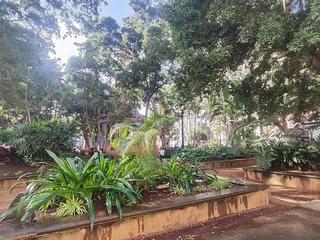
Prince Square
Santa Cruz & La Laguna
A leafy 19th-century square created from the former Franciscan convent garden and still one of central Santa Cruz’s most atmospheric public spaces.

Carta Palace
Santa Cruz & La Laguna
An 18th-century merchant palace on Plaza de la Candelaria, combining Canarian Baroque architecture with neoclassical details and a long civic history.

Santa Cruz de Tenerife
Santa Cruz & La Laguna
Tenerife’s Atlantic-facing capital: a port city shaped by Guanche Anaga, the Castilian conquest, maritime trade, fortifications, civic life and modern Canarian culture.

Casino de Tenerife
Santa Cruz & La Laguna
Discover the protected Real Casino de Tenerife building in central Santa Cruz.

Candelaria Square
Santa Cruz & La Laguna
Santa Cruz’s historic main square, shaped by military, civic and commercial life and anchored by the 18th-century Triunfo de la Candelaria monument.
La Hierbita
Santa Cruz de Tenerife · Santa Cruz & La Laguna
A Canarian restaurant on pedestrian Calle Clavel in central Santa Cruz, convenient for a meal near Teatro Guimerá.

Isabel II Square
Santa Cruz & La Laguna
The Plaza de Isabel II is a public square in Santa Cruz de Tenerife, Spain.
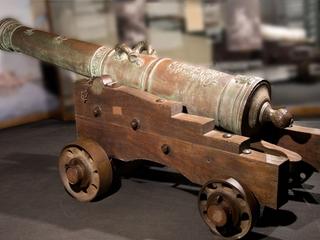
Castillo de San Cristóbal
Santa Cruz & La Laguna
Remains of Santa Cruz's historic coastal castle beneath Plaza de España, with an interpretation centre and the El Tigre cannon.
Santa Cruz de Tenerife · Santa Cruz & La Laguna
An underground interpretation centre beneath Plaza de España in Santa Cruz, preserving castle remains and explaining Tenerife’s historic coastal defences and the 1797 battle against Nelson.

Spain Square (Plaza de España)
Santa Cruz & La Laguna
Plaza de España (lit. Spain Square), is the largest square in the city of Santa Cruz de Tenerife and the Canary Islands (Spain). The square is located in the centre of town, 1.4 km north of the Auditorio de Tenerife.
Related places
 Museums & Culture
Chapel of Venerable Orden Tercera
An 18th-century Franciscan Third Order chapel beside San Francisco church, preserving rococo art and an important chapter of Santa Cruz civic history.
 Museums & Culture
Santa Cruz Municipal Museum of Fine Arts
Santa Cruz’s municipal fine-arts museum, with Flemish, Spanish and Canarian works that trace the island’s artistic and trading connections across centuries.